Let’s look at both options side by side, because what seems cheaper isn’t always what actually costs less once everything is added up.
Is it Cheaper to Ship a Car or Drive it Yourself?
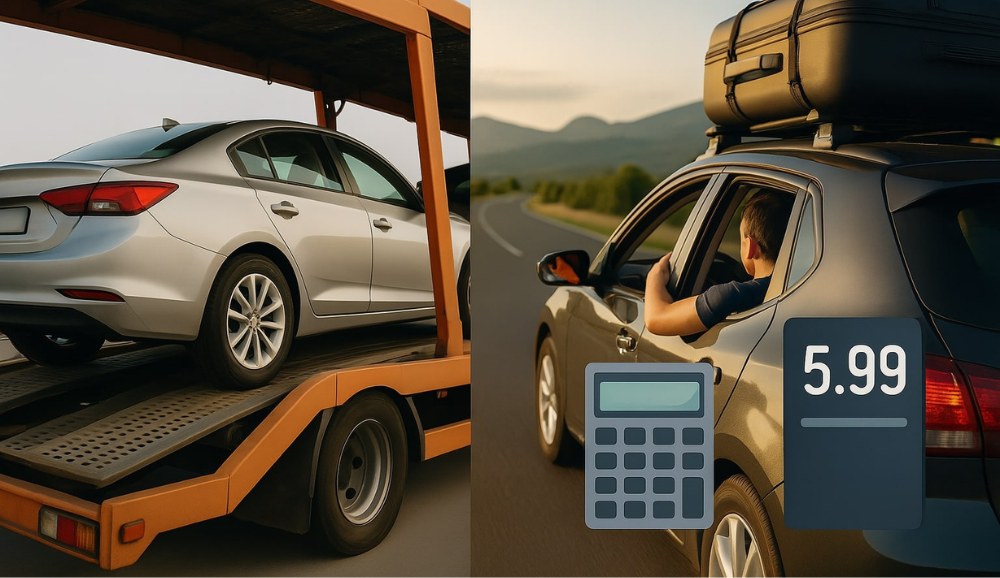
For most long-distance moves over 700–800 miles, shipping your car is usually cheaper and far less stressful once you factor in gas, hotels, food, wear and tear, and lost time. Driving can make sense for shorter routes or flexible schedules, but for cross-country moves, car shipping often wins.
In this article:
- Breaking Down the Costs
- Option A: Driving Yourself
- Option B: Shipping Your Car
- How Car Shipping Works with iMoving (Step-by-Step)
- Section 2: Pros & Cons of Driving Your Car
- Section 3: Pros & Cons of Shipping Your Car
- Section 4: Cost Comparisons by Situation
- Frequently Asked Questions
- Final Thoughts: What Should You Do?
If you are planning a move across the country or simply buying that dream Audi finally, you might need to understand this simple question to save money where you can. Whatever your reason, it always comes up: Is it cheaper to ship your car or drive it yourself and rack up those miles?
At first glance, the obvious answer seems like: "Obviously just drive it.” But once you start adding up hidden costs like gas, hotels, meals, wear and tear on your Audi, and your sanity, things start looking very different.
This guide breaks down the real costs, pros and cons, and answers the most common questions about car shipping vs road-tripping it. Whether you’re moving from Miami to Chicago or just trying to get Grandma’s old beater to your college dorm, we’ve got you covered.
Shipping vs Driving at a Glance
Choose Item
Driving Yourself
$700–$1,000+
Shipping Your Car
$800–$1,500
Driving Yourself
2–4 days of driving
Shipping Your Car
5–10 days transit
Driving Yourself
Yes
Shipping Your Car
No
Driving Yourself
High
Shipping Your Car
Low
Driving Yourself
Short moves, road trips
Shipping Your Car
Long-distance moves
Option A: Driving Yourself
Let’s say you’re moving 1,300 miles to Chi-town. The cost of driving includes:
- Gas: At 25 MPG and $3.80 per gallon, expect $225–$250
- Hotels: About 500 miles per day means two nights at $120 per night = $240
(Sure, you can sleep in your car if you’re a broken college student, but most people don’t want to) - Food: Road snacks, fast food, and truck-stop coffee = $60–$100
- Tolls: Budget $25–$100 depending on your route
- Wear and tear: Industry averages estimate $0.10–$0.15 per mile, or $150–$225
- Time off work: PTO or lost wages can quietly add hundreds
- Babysitter: Two days in a car with kids? Your sanity has a price
Total driving cost estimate: $700–$1,000+
Option B: Shipping Your Car
Car transport rates will change based on distance, season, car type, and whether you want enclosed or open shipping.
- Standard 1,300-mile shipment: $700–$1,200 on an open carrier
- Enclosed shipping (for classic or luxury cars): $1,200–$2,000
- Expedited service: Add $200–$500 for that make it here by Thursday I need the car asap run
- Door-to-door vs. terminal-to-terminal: Door-to-door is more convenient and slightly pricier. Delivery always comes at a premium
Total shipping cost estimate: $800–$1,500
How Car Shipping Works with iMoving (Step-by-Step)
If you’ve never shipped a car before, here’s exactly how it works on iMoving, from start to finish.
1. Enter Your Route and Date
Start by entering where the car is being picked up and where it’s going, along with your first available date. We use city or ZIP code to show accurate, route-based pricing right away.
2. Add Your Vehicle Details
Select your car’s make, model, and year, then confirm whether it’s operable and whether you want open or enclosed transport. You can also add multiple cars if needed.
3. Compare Real, Door-to-Door Options
iMoving instantly shows available carriers for your route, including:
- Door-to-door pricing
- Estimated transit time
- Carrier ratings
- Pickup flexibility (1, 3, 5, or 7-day windows)
This lets you balance price vs speed instead of being forced into one option.
4. Choose Pickup Flexibility
- Need the car picked up fast? Select a shorter pickup window.
More flexible on timing? Choose a longer window to save money.
You stay in control of both cost and schedule.
5. Review Full Trip Details
Before moving forward, you’ll see:
- Exact pickup and drop-off locations
- Vehicle details
- Transit time estimate
- Final price with no hidden fees
6. Schedule Pickup and Delivery
Once booked, the carrier schedules pickup as close as legally and safely possible to your address. The vehicle is inspected at pickup and again at delivery to ensure everything arrives as expected.
iMoving simplifies the entire process by letting you compare licensed, insured carriers upfront, choose the option that fits your timeline and budget, and avoid last-minute surprises.
Section 2: Pros & Cons of Driving Your Car
Pros:
- Complete control: You set the schedule, route, stops, and playlist. For the control freaks out there like me this means everything.
- Mini road trip: Make it a vacation. Detour to see friends or national parks. Disney Land awaits you.
- Immediate access: No waiting days for delivery your car is with you.
- No strangers driving your baby: You’re behind the wheel.
- When you choose to move your car with iMoving you have thousands of reviews backing up the service to give you peace of mind- you simply close down the deal you need and can move without the added anxiety.
Cons:
- Stress and fatigue: Driving 8–10 hours a day is exhausting it will take a toll on your mental and physical health.
- Unexpected costs: Flat tire? Engine trouble? Suddenly, it’s an expensive adventure.
- Depreciation: Long drives lower your car’s resale value.
- Time: If you value your time and days off work for Thailand, this can be a major downside.
- Safety: Long-distance driving can be risky, especially solo. You can accidentally fall asleep behind the wheel.
Section 3: Pros & Cons of Shipping Your Car
Pros:
- Convenience: You book it, they handle the rest. Easy peasy.
- Save time: You fly or travel another way while your car takes the scenic route without you.
- No mileage: Your car stays in tippy top condition.
- Lower risk of accidents: Less stress.
Cons:
- Costs: Prices change with demand (summer moves cost a lot more).
- Scheduling delays: Your car may take several days to a week (or more).
- Carrier quality: Not all shippers are equal some horror stories exist.
- You can’t load your car with stuff (legally): Most companies prohibit it or limit it to under 100 pounds in the trunk.
Section 4: Cost Comparisons by Situation
Moving Across The Country?
If you’re moving 2,000+ miles with a packed schedule and relocation stress- trust me just ship your car and take a flight. You’ll save energy, time, and potentially money when you consider hotels and time off.
Buying a Car Out of State?
Ship it. Especially if you’re not already planning to fly out there. Driving a new-to-you car long-distance with unknown things is a gamble.
Seasonal Fun?
If you bounce between Florida and New Jersey every season, shipping may be worth it, especially when you account for long-term shipping plans or a trusted carrier.
Budget-Friendly Student?
Drive it- maybe. If you're not pressed for time and your route is under 1,000 miles, it might be cheaper. Just avoid peak gas prices and plan your stops smart to crash on the couches of your friends and family on the way. As a budget friendly student- if those few hundred dollars really do matter to you then we highly recommend to count every cost well as it still might turn out cheaper to ship your car.
Frequently Asked Questions
Yes, with licensed, insured carriers. The majority of car transport shipments are completed without any insurance claims needed. That said, damage can happen so always inspect your car before and after and take photos for proof. These photos will be your proof and peace of mind during the shipment. If you are really nervous book a shipment that allows you in real time to track your car’s whereabouts.
For short distances it can take under a week but for 1000+ miles you can expect 2 week delivery windows. You can always pay more for expedited delivery. Add buffer time for traffic, weather, or carrier availability. The time it will take varies every single move so take to the company for real time realistic overviews.
Technically, no- it's not legal. Most carriers don’t allow personal items inside for insurance and weight reasons. Some will allow up to 100 lbs in the trunk—but always ask first. Illegal stuffing = extra fees or shipping refusal. Don’t end up with a fine you could’ve avoided. Keep those funds for a rainy day ice cream.
Trust your gut is the underlying sentiment here. The first thing I would say is to check DOT registration, then go online and look for real customer reviews. Don’t simply choose the cheapest option- compare apples to apples.
As well, be sure to ask about insurance and inspection policies. Use a broker if you want a range of quotes from different car shippers. Use a carrier if you want a more direct relationship with the guys driving your car.
Spring and fall are sweet spots. The summer months are the most expensive as demand to complete moves before the school year hits hard.
The winter can be tricky, depending on where you are moving to and from with winter storms messing up schedules, although you can save big during these months. Plan at least 2–3 weeks in advance for the best rates.
Final Thoughts: What Should You Do?
The real question isn’t “Which is cheaper?” It’s: What is cheaper for you—in money, time, and stress? If you’re on a strict budget, don’t mind long drives, and your route isn’t too intense, driving may win. If the route has great stops and you can make a fun trip of it- why not? For example, Road 1 in CA would be a great time to take the scenic route and enjoy the movie as a road trip. If you value convenience, don’t want to tack miles onto your car and ruin its resale value, or just want one less moving headache, car shipping is your friend.
No matter what you choose, we know you will get there in one piece and your Audi will thank you for planning ahead. Enjoy the ride (literally) and take a deep breath. iMoving would be more than happy to help set up your car shipping needs.

Rachel Kaplan
Rachel Kaplan
Get all moving services you need in one place
Shop Our Services